

Living with Parkinson’s disease can make everyday activities increasingly unpredictable. A senior may walk comfortably in the morning but struggle with stiffness, slow movement, or balance later in the day. Tasks such as dressing, preparing meals, and getting out of a chair may require additional time and assistance.
For families managing these changes, senior home care services from Maple Senior Home Care include personal support and chronic-condition care for older adults living with Parkinson’s in Toronto.
Understanding how symptoms affect daily routines can help families arrange practical assistance while preserving independence and following the recommendations of the person’s medical team.
How Does Parkinson’s Disease Affect Everyday Activities?
Parkinson’s disease is a progressive neurological condition that affects movement and can produce several non-motor symptoms.
Common movement difficulties include tremor, muscle stiffness, slowness, and balance problems.
Some people also experience freezing of gait, where their feet seem temporarily unable to move despite their intention to walk.
Symptoms vary significantly between individuals.
For one senior, buttoning a shirt may become difficult because of reduced hand coordination.
Another may struggle to rise from a chair or turn safely while walking.
Fatigue, sleep problems, constipation, and changes in mood can also affect everyday life.
Home support should reflect the person’s particular challenges rather than treating every individual with Parkinson’s as having the same limitations.
Maple Senior Home Care includes Parkinson’s disease among the chronic conditions supported through its home care services.
Why Can Parkinson’s Symptoms Change Throughout the Day?
Some people experience fluctuations in movement associated with medication timing, fatigue, stress, or other factors.
A task that feels manageable at one time may become much harder later.
Families may notice that their parent needs longer to get dressed before breakfast but moves more comfortably during another part of the day.
A useful approach is to record when difficulties occur.
Note the time, activity, and relevant circumstances.
Share this information with the neurologist or Parkinson’s care team.
Do not independently change prescribed medication timing or dosage.
Maple Senior Home Care can help families organize appropriate personal support around established routines and observed periods of difficulty.
The objective is to make assistance available when it is most useful, without unnecessarily taking over activities the senior can perform independently.
How Can a PSW Help With Dressing and Personal Hygiene?
Dressing can become physically demanding when someone experiences stiffness, tremor, or slow movement.
Small buttons, zippers, shoelaces, and tight clothing may require more coordination than the senior can comfortably manage.
An occupational therapist may recommend suitable clothing adaptations or dressing aids.
A personal support worker can assist with dressing according to the individual’s care plan.
The senior should be encouraged to complete manageable steps independently when safe.
Bathing may present additional challenges because of slippery surfaces, standing requirements, and restricted movement.
Maple Senior Home Care provides PSW assistance with bathing, dressing, grooming, toileting, and appropriate daily mobility.
A consistent caregiver can become familiar with the person’s preferred routine and help avoid unnecessary rushing.
Care should emphasize dignity, comfort, and safety rather than completing tasks as quickly as possible.
What Is Freezing of Gait and Why Does It Matter?
Freezing of gait describes episodes when a person temporarily feels unable to initiate or continue walking.
These episodes may occur when starting movement, turning, approaching a doorway, or navigating a narrow space.
Because freezing can affect balance, it may increase fall risk.
Family members should avoid pulling or pushing someone through a freezing episode.
Instead, ask the individual’s physiotherapist or Parkinson’s specialist to teach suitable strategies.
Different people may benefit from different techniques or mobility aids.
Keeping pathways clear and allowing enough space to turn can also make the home easier to navigate.
Maple Senior Home Care caregivers can follow established mobility instructions when providing appropriate daily assistance.
They should not introduce unfamiliar transfer or movement techniques without proper assessment.
Sudden new weakness or a major unexpected change in walking ability requires medical evaluation.
How Can Families Make the Home Easier to Navigate?
Environmental adjustments may reduce unnecessary physical challenges.
Begin by removing clutter from frequently used pathways.
Ensure that furniture does not obstruct walking routes or create narrow turning spaces.
Consider whether chairs and beds are suitable for the person’s transfer abilities.
Bathrooms may require professionally recommended grab bars, seating equipment, or other adaptations.
Adequate lighting can also help older adults navigate their surroundings.
However, equipment should be selected according to individual mobility needs.
A physiotherapist or occupational therapist can assess the home and recommend appropriate modifications.
Families should also review whether commonly used items are stored within easy reach.
The aim is to create an environment that supports movement without requiring repeated bending, reaching, or hurried transfers.
Why Are Medication Routines Important for Parkinson’s?
Many people with Parkinson’s take medication on carefully prescribed schedules.
Changes in timing can affect symptom management.
Families should follow the medication instructions provided by the treating clinician and pharmacist.
A written schedule may help relatives and caregivers understand the established routine.
Record missed doses or difficulties taking medication and seek professional advice when problems occur.
Do not independently adjust the dosage or schedule in response to changing movement symptoms.
Maple Senior Home Care offers medication reminders through appropriate caregiving arrangements and medication management within its nursing services.
Families should clarify which medication-related activities are authorized for the assigned caregiver and which require a registered nurse or another healthcare professional.
Accurate communication is particularly important when several people share caregiving responsibilities.
How Can Meal Preparation Help Seniors With Parkinson’s?
Parkinson’s symptoms can make grocery shopping, cooking, and eating more difficult.
A person experiencing stiffness or fatigue may find it uncomfortable to stand at the kitchen counter for extended periods.
Tremor or reduced hand coordination can also complicate food preparation and the use of utensils.
A caregiver may help prepare meals, organize ingredients, and maintain a regular food routine.
Maple Senior Home Care includes meal preparation and homemaking among its services, allowing practical assistance to be combined with personal care.
However, families should pay particular attention to swallowing concerns.
Some people with Parkinson’s develop difficulty swallowing, which can increase the risk of choking and other complications.
Coughing or choking during meals should be discussed with the healthcare team.
A speech-language pathologist or another appropriate clinician may recommend individualized strategies.
Families should not change food or liquid textures without professional guidance.
Why Is Consistent Caregiver Support Valuable?
People living with Parkinson’s may have established routines that make daily activities more manageable.
A familiar caregiver can learn how long particular tasks take, which activities cause fatigue, and when the senior prefers assistance.
This knowledge may help avoid rushing someone through dressing, bathing, or meals.
Caregiver consistency can also support communication.
A senior may feel more comfortable explaining changes in symptoms to someone they know.
Maple Senior Home Care emphasizes providing one consistent caregiver rather than a rotating team as part of its personalized care model.
The agency also develops care plans through nurse-led assessments.
This approach gives families an opportunity to explain their parent’s movement patterns, preferences, language needs, and established clinical instructions.
Can Companionship Help Someone Living With Parkinson’s?
Parkinson’s disease can affect more than physical movement.
Some seniors become less socially active because walking, travelling, or participating in familiar activities requires more effort.
Others may feel embarrassed by tremor or slowed movement.
Maintaining social connections and enjoyable activities remains important.
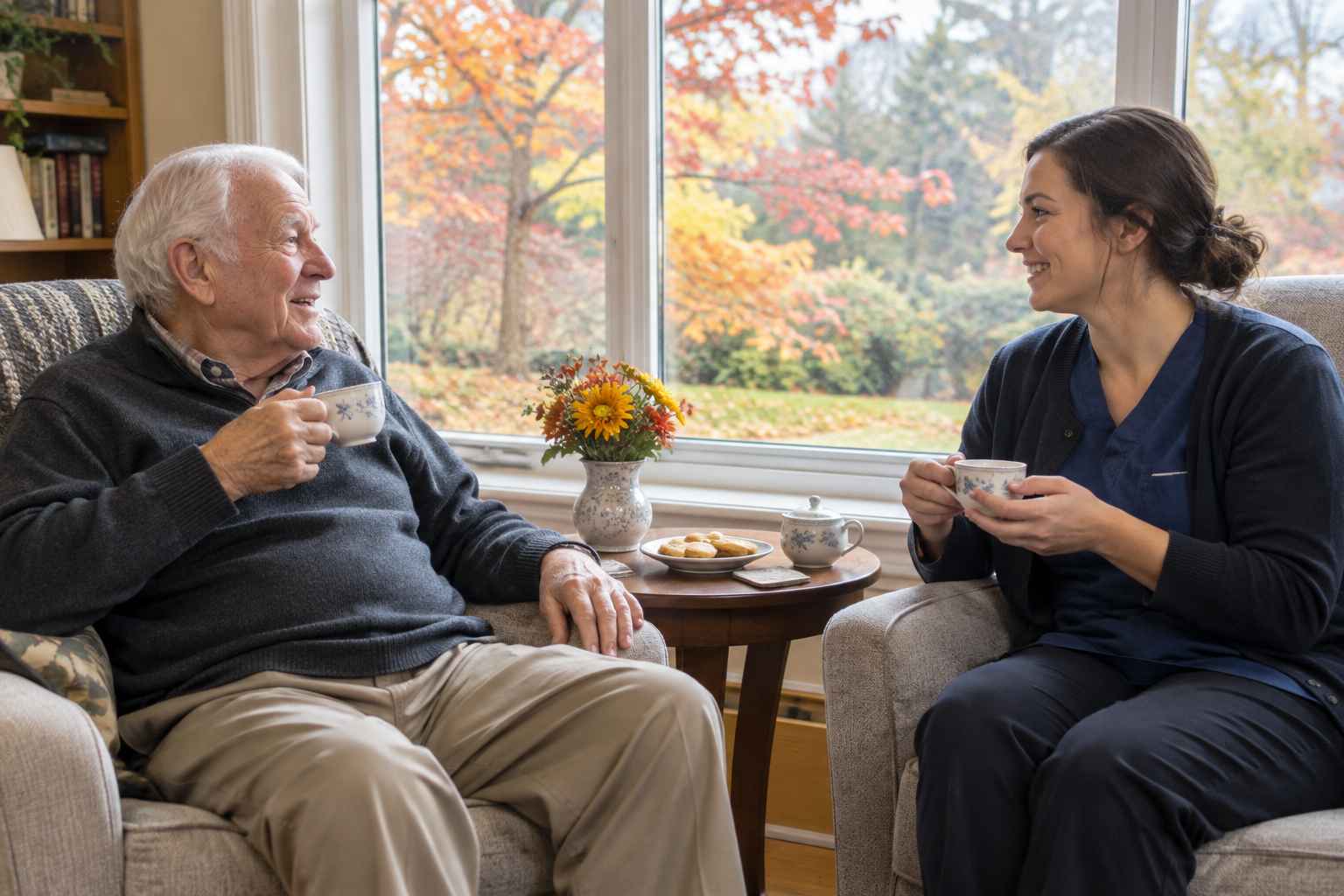
A companion caregiver can offer conversation, accompany the senior on suitable outings, share meals, or participate in activities the person enjoys.
The activity should match the individual’s abilities and interests.
For example, a senior who previously enjoyed gardening may appreciate organizing plants or tending to accessible containers.
Maple Senior Home Care offers companion care that can complement practical personal assistance.
Companionship is not a substitute for treatment of depression, anxiety, or other health concerns, but it can help maintain meaningful daily engagement.
How Can Families Recognize When Care Needs Have Changed?
Parkinson’s symptoms and support requirements can change over time.
Families may notice increasing difficulty dressing, more frequent falls, additional fatigue, or problems completing daily tasks.
Rather than assuming these changes are inevitable, discuss them with the treating healthcare team.
Medication effects, other illnesses, and rehabilitation needs may require evaluation.
Home care schedules may also need adjustment.
A parent who initially required occasional assistance might later benefit from more frequent visits or support at particular times of day.
Maple Senior Home Care provides flexible caregiving arrangements that can be reviewed as the senior’s needs evolve.
A nurse-led assessment can help families identify current practical support requirements while clinical treatment remains under the direction of the relevant specialists.
What Should a Parkinson’s Home Care Plan Include?
A useful care plan should identify the activities the senior can manage independently and those requiring assistance.
It should consider dressing, bathing, mobility, meals, medication routines, household tasks, and companionship.
Families should provide relevant instructions from the neurologist, physiotherapist, occupational therapist, and other healthcare professionals.
The plan should also explain what caregivers should do when symptoms change.
For example, the family may need a procedure for reporting new falls, swallowing problems, or unusual movement difficulties.
Caregiver responsibilities must be clear, particularly when clinical tasks or medication assistance are involved.
The objective is to create predictable daily support that adapts to the person’s actual needs without replacing their medical treatment.
Frequently Asked Questions
Can seniors with Parkinson’s continue living at home?
Many can, depending on their symptoms, mobility, home environment, personal preferences, and available support.
Can a PSW help someone with Parkinson’s get dressed?
Yes. A PSW can provide appropriate dressing assistance according to the person’s assessed abilities and individualized care plan.
Does Parkinson’s always require 24-hour care?
No. Care requirements vary significantly. Some people need limited assistance, while others eventually require more extensive support.
Can a caregiver adjust Parkinson’s medication when symptoms become worse?
No. Changes to prescribed medication must be directed by the appropriate healthcare professional.
Arrange Parkinson’s Home Care in Toronto
Supporting an older adult with Parkinson’s requires patience, predictable routines, appropriate mobility assistance, and respect for changing abilities.
A personalized home care arrangement can help with everyday activities while allowing the senior to retain meaningful independence.
Maple Senior Home Care provides chronic-condition support, PSW personal care, companionship, meal preparation, and nurse-led care planning in Toronto, including North York, Scarborough, Etobicoke, East York, and Midtown, as well as Mississauga, Brampton, Vaughan, Markham, and Richmond Hill.
To discuss Parkinson’s home support or arrange a free in-home nurse assessment, call Maple Senior Home Care at (437) 370-3710.


Leave a Reply