
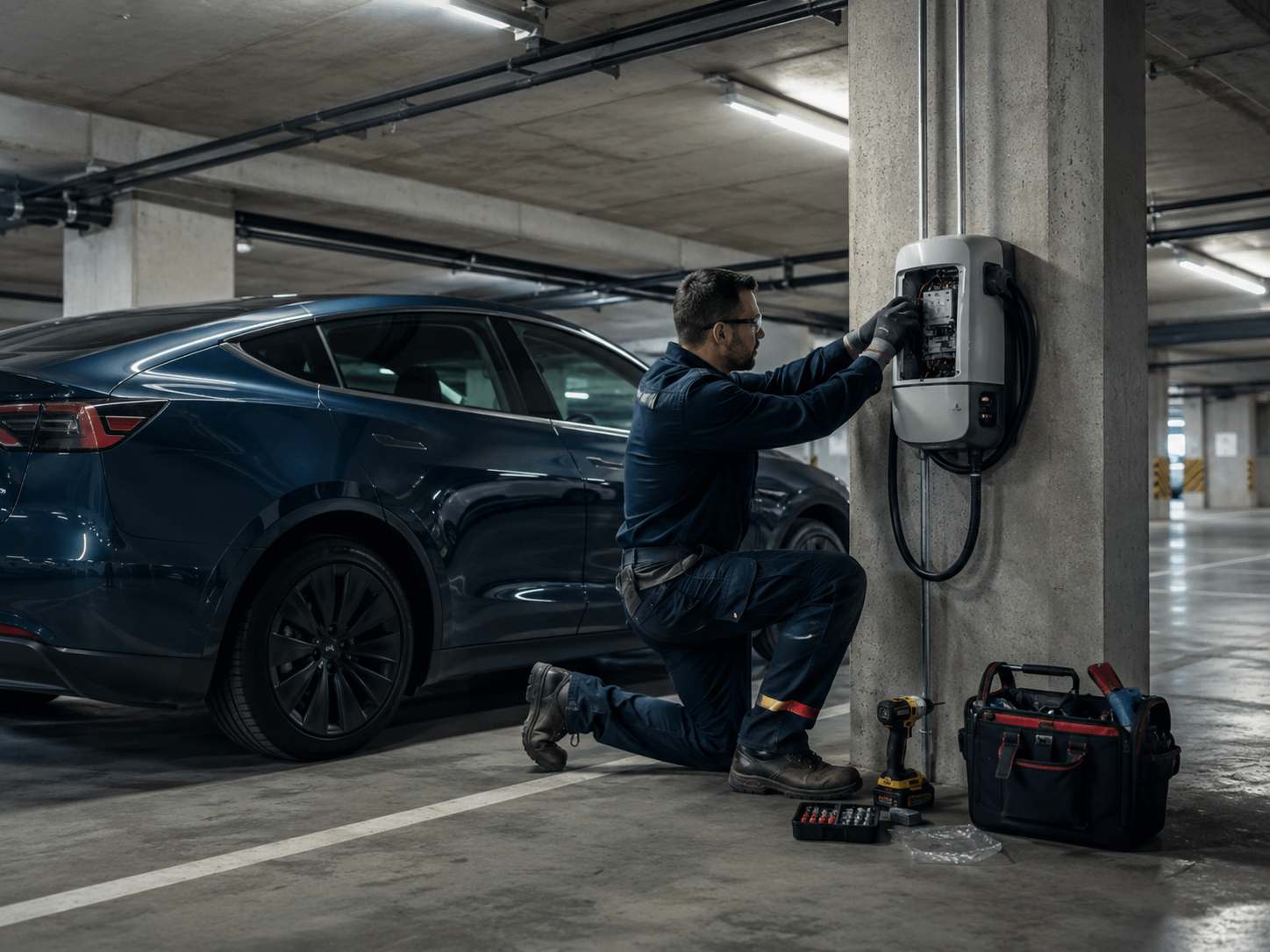
If your Toronto home’s electrical service does not appear to have enough spare capacity for a Level 2 EV charger, upgrading from 100 amps to 200 amps is not necessarily your only option.
An approved Energy Management System (EMS) can sometimes allow an EV charger to be installed without upgrading the home’s electrical service. The system monitors electrical demand and controls the EV charging load so the charger does not exceed the capacity made available to it.
Ontario’s Electrical Safety Authority specifically permits Energy Management Systems to monitor electrical loads and automatically control EV charging equipment. If you want to evaluate whether load management could avoid a costly service upgrade, professional EV Charger Installation planning should include an assessment of your existing panel, service capacity, charger requirements and available energy-management options.
Whether load management will work for your Toronto home depends on the existing service, household electrical loads, charger, EMS equipment and installation design.
What Is EV Charger Load Management?
EV load management is a way of controlling how much electricity an EV charger can use based on what is happening elsewhere in the home’s electrical system.
For example, suppose your home has a 100 amp service and several large electrical loads are operating at the same time. Rather than allowing the EV charger to draw its maximum power regardless of household demand, an EMS can monitor the service and control the charger.
The system may:
- reduce the charging rate;
- temporarily stop charging; or
- allow charging to increase again when household demand falls.
ESA defines an EMS as equipment capable of controlling electrical loads by connecting, disconnecting, increasing or reducing power.
For an EV owner, this usually happens automatically. You plug the vehicle in, and the system determines when electrical capacity is available.
Can Load Management Really Avoid a 200 Amp Upgrade?
In some homes, yes.
ESA’s current EV charging bulletin states that when an EMS monitors the consumer’s service and feeders and controls the EVSE, the EV charging demand does not have to be included in the calculated load in the same way it would be without that management system.
That can make an important difference in a home where adding an unmanaged EV charger would otherwise exceed the available electrical capacity.
Toronto Hydro also notes that adding an EV charger might require an electrical service upgrade, but not always, and recommends having a Licensed Electrical Contractor assess the home’s existing electrical capacity and charging options.
Therefore, a homeowner should not assume a 200 amp upgrade is mandatory until load-management options have been evaluated.
Example: EV Charging on a 100 Amp Toronto Home
Consider a house with a 100 amp electrical service.
During periods of low household demand—such as overnight—the home may have plenty of electrical capacity available for EV charging.
However, at another time the homeowner might simultaneously be using:
- an electric range;
- a clothes dryer;
- air conditioning;
- an electric water heater; and
- other household equipment.
An appropriately designed EMS can monitor that changing demand.
If household consumption approaches the system’s configured limit, EV charging can be reduced or paused. When appliances cycle off and capacity becomes available, charging can resume.
This allows the EV to use available capacity without requiring the home’s electrical system to support maximum household demand and maximum EV charging demand simultaneously.
Does Load Management Make Charging Much Slower?
Not necessarily.
The effect depends on how often your home approaches its electrical capacity.
Many vehicles spend several hours parked overnight, when other major household loads may be relatively low. In that situation, the EV charger may have substantial periods when it can operate normally.
If your home regularly has high electrical demand at the same time you charge your vehicle, the EMS may reduce charging more frequently.
Your electrician should therefore consider both your home’s electrical capacity and your driving habits.
If your car only needs to replace the energy used during a typical daily commute, you may not need maximum charging output throughout the entire night.
Is a Smart EV Charger the Same as Load Management?
No.
A charger being advertised as “smart” does not automatically mean it functions as an electrical Energy Management System.
Wi-Fi connectivity, smartphone apps, scheduled charging and adjustable charging rates are useful features, but they do not by themselves establish that the charger can perform the electrical load-management function required for service-capacity calculations.
ESA specifically states that EVSE cannot be treated as an EMS unless it has the features required to function as one.
This is why charger and load-management equipment should be selected as part of the electrical design rather than simply purchasing a charger based on consumer features.
Load Management vs. Lowering the Charger Amperage
These are related but different approaches.
Reducing charger output means configuring compatible equipment so it cannot exceed a particular charging current.
Dynamic load management monitors electrical demand and adjusts EV charging based on available capacity.
For example, a charger may be capable of higher output but be permanently commissioned at a lower setting. ESA permits adjustable amperage settings for certain fixed-in-place EVSE when specific requirements and manufacturer instructions are followed.
An EMS, by comparison, can respond dynamically as household demand changes.
Depending on the property, either strategy—or a combination of the two—may be considered.
When Is Load Management Worth Considering?
Load management can be particularly attractive when:
- your home has a 100 amp service;
- the load calculation leaves limited capacity for EV charging;
- your electrical panel is otherwise in suitable condition;
- you only need substantial charging during lower-demand periods;
- a 200 amp service upgrade would involve significant additional work; or
- you want to use the existing electrical infrastructure more efficiently.
Toronto Hydro provides a peak-demand tool that shows the highest amount of electricity a home has used at one time. The utility specifically notes that this information can help homeowners and Licensed Electrical Contractors determine whether an electrical upgrade may be necessary before adding equipment such as an EV charger.
When Might a Service Upgrade Still Be Better?
Load management is useful, but it is not automatically the best solution for every property.
A larger electrical service may make more sense if you are planning significant additional electrification, such as:
- multiple EV chargers;
- electric heating;
- heat pumps;
- electric water heating;
- a hot tub or pool;
- an induction range;
- a secondary suite; or
- other major future electrical loads.
In that situation, the EV charger may be only one part of a much larger increase in electrical demand.
A service upgrade can provide additional capacity for both current and future equipment.
The right choice should be based on the property’s overall electrical plan rather than the EV charger alone.
Do I Still Need an Electrician and ESA Requirements?
Yes.
Installing load-management equipment does not turn an EV charger into a DIY installation.
ESA requires EV charger installations in Ontario to comply with applicable electrical requirements, and EV charging equipment must carry an accepted Canadian certification or evaluation mark.
A Licensed Electrical Contractor can determine whether an EMS is appropriate, select compatible equipment, calculate the required electrical loads and design the installation correctly.
Frequently Asked Questions
Can I install an EV charger on 100 amp service using load management?
Potentially, yes. An approved EMS may allow EV charging to be controlled according to available electrical capacity. The home’s electrical system must still be properly assessed and the installation designed accordingly.
Does load management shut my charger off?
It can temporarily reduce or interrupt EV charging when necessary, depending on the type of system and available electrical capacity. Charging can increase or resume when sufficient capacity becomes available.
Is load management cheaper than upgrading to 200 amps?
It can involve less electrical work in some homes, but project costs vary. The comparison depends on the existing service, panel, wiring, utility requirements and equipment needed.
Can two EV chargers use load management?
Yes, compatible systems can support load-sharing strategies. ESA’s current EV charging guidance specifically addresses multiple communicating EVSE units and load sharing.
Final Answer
Yes, load management may allow you to install a Level 2 EV charger in Toronto without upgrading your electrical service.
An approved Energy Management System can monitor household electrical demand and automatically control EV charging so the system stays within its designed electrical limits.
For homeowners with 100 amp service or limited spare capacity, that makes load management an important option to investigate before automatically committing to a 200 amp upgrade.
However, it is not suitable for every property. Your existing loads, charging requirements, equipment and future electrical plans should all be evaluated by a Licensed Electrical Contractor before choosing between load management and a service upgrade.




Leave a Reply